The Creation of the United States Marine Corps and Their Role in the American Revolution
The United States Marine Corps (USMC) traces its official birthday to November 10, 1775, when the Second Continental Congress, meeting in Philadelphia, passed a resolution establishing the Continental Marines. Drafted by John Adams, the resolution authorized “two Battalions of marines” to serve as landing forces for the newly formed Continental Navy. These Marines were to consist of one colonel, two lieutenant colonels, two majors, and the standard complement of officers and enlisted men, with the explicit requirement that recruits be “good seamen, or so acquainted with maritime affairs as to be able to serve to advantage by sea when required.” They were to serve for the duration of the war with Great Britain unless dismissed by Congress and were integrated into the Continental Army’s authorized strength before Boston.
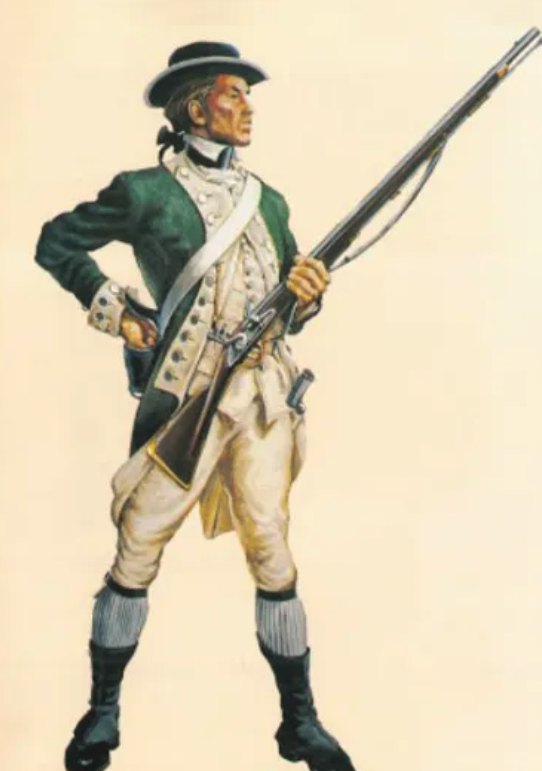
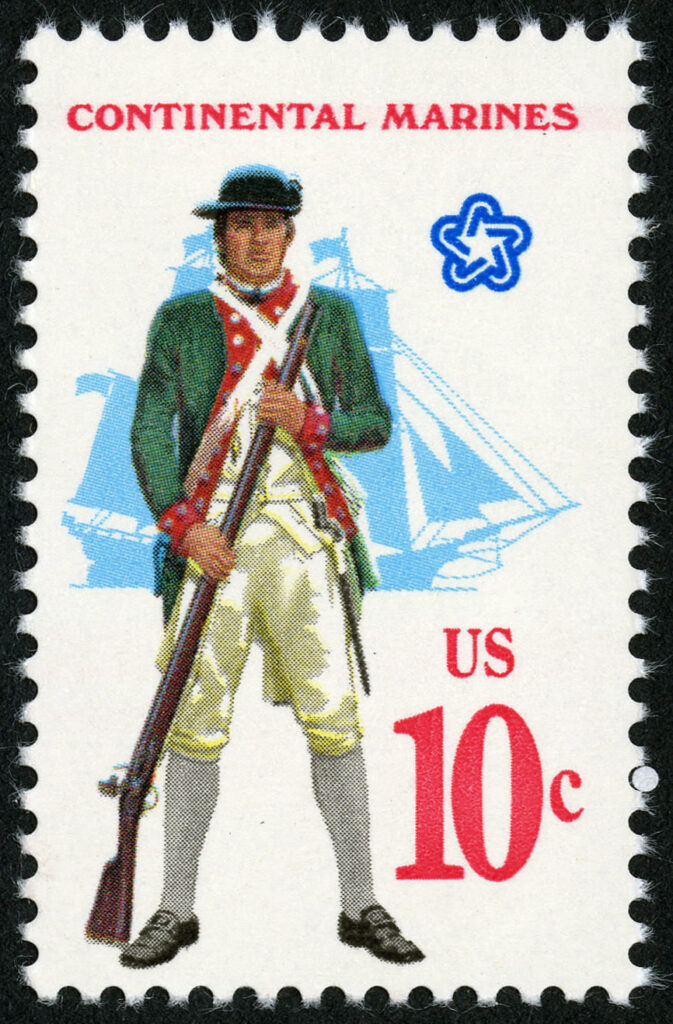
Recruitment began immediately at Tun Tavern in Philadelphia, a popular gathering place owned in part by Robert Mullan. Captain Samuel Nicholas, a 31-year-old Philadelphia native and son of a prominent Quaker family, was commissioned as the first officer in the Continental Marines on November 28, 1775 (his formal commission signed by John Hancock). Nicholas is traditionally regarded as the Corps’ first commandant. By early 1776, he had raised enough Marines to man the vessels of the Continental Navy’s first squadron under Commodore Esek Hopkins. The Marines wore green coats with white facings, carried muskets and bayonets, and were trained for shipboard security, discipline enforcement, sharpshooting during naval engagements, boarding parties, and amphibious landings.
The Continental Marines were not the permanent United States Marine Corps we know today. Following the Treaty of Paris in 1783, which ended the Revolutionary War, the Continental Navy and its Marines were disbanded along with the rest of the wartime forces. It was not until July 11, 1798—during the Quasi-War with France—that President John Adams signed “An Act for establishing and organizing a Marine Corps,” formally creating the USMC as a distinct service under the Department of the Navy. The modern Corps proudly traces its lineage, traditions, and birthday directly to the Continental Marines of 1775, maintaining unbroken historical continuity despite the 15-year gap.
From their inception, the Continental Marines played a vital, multifaceted role in the American Revolution, embodying the Corps’ enduring ethos of “first to fight” on land and sea. Their primary mission was to support naval operations while providing versatile infantry capabilities. Marines served as shipboard guards, enforced discipline among sailors, and acted as marksmen in close-quarters naval combat. Most significantly, they conducted the young nation’s first amphibious operations and raids, disrupting British supply lines and seizing critical resources at a time when the Continental Army faced severe shortages of powder, cannon, and other matériel.
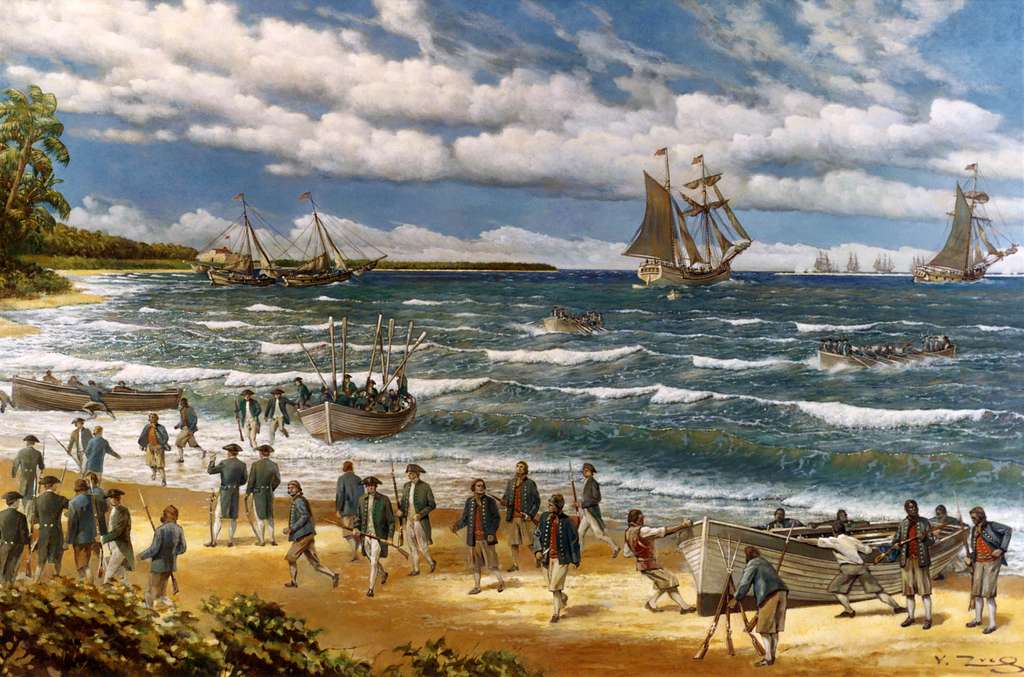
The Corps’ inaugural combat action came on March 3, 1776, in the Raid of Nassau (also called the Battle of New Providence) in the Bahamas. Captain Nicholas led approximately 250 Marines and 50 sailors ashore from Commodore Hopkins’ squadron—the first American landing on a hostile foreign shore. They captured Fort Montagu and later Fort Nassau, seizing 71 cannon, 15 mortars, and other supplies desperately needed by George Washington’s army. Although the British governor had spirited away most of the gunpowder, the raid demonstrated the effectiveness of combined naval-Marine operations and boosted American morale. A second successful raid on Nassau occurred in January 1778 under Captains John Rathbun and John Trevett.
Marines also distinguished themselves in direct support of the Continental Army during the critical winter campaign of 1776–1777. After the fleet’s return from the Bahamas, Nicholas and roughly 130 Marines joined Washington’s forces in New Jersey. They arrived too late for the Battle of Trenton on December 26, 1776, but played a decisive role at the Battle of Princeton on January 3, 1777. Attached to General Nathanael Greene’s division, the Marines were held in reserve until a critical moment when British forces threatened to outflank the Americans. Their timely intervention, marked by disciplined volleys and bayonet charges, helped secure the American victory—one of the war’s turning points that revived flagging Patriot morale. Some Marines also escorted Hessian prisoners taken at Trenton and Princeton and later served as artillerymen during the “Forage War.”
Additional operations underscored the Marines’ versatility. In April 1778, Marines under Captain John Paul Jones participated in daring raids on British soil at Whitehaven (England) and St. Mary’s Isle (Scotland), burning shipping and seizing supplies to bring the war home to the enemy. Throughout the conflict, small detachments of Marines served aboard Continental warships, participating in ship-to-ship actions such as the engagement with HMS Glasgow in April 1776 and providing security at naval bases. Their service extended to riverine and coastal operations, boarding parties, and even limited artillery support when the Army’s gun crews were depleted.
By war’s end in 1783, the Continental Marines had fought in more than a dozen significant operations across the Atlantic, Caribbean, and North American theaters. Though never exceeding a few hundred men at any one time, their impact far outweighed their numbers. They proved the value of a specialized naval infantry force capable of rapid power projection—concepts that remain central to the modern USMC’s mission of expeditionary warfare.
By Bureau of Engraving and Printing. Designed by Edward Vebell. – U.S. Postal Service; National Postal Museum: Military Uniforms Issue, Public Domain, https://commons.wikimedia.org/w/index.php?curid=46984780
The legacy of the Continental Marines endures in the Corps’ motto “Semper Fidelis” (Always Faithful), its birthday celebrations on November 10, and its role as America’s premier crisis-response force. From the green-coated patriots who stormed Nassau’s beaches to today’s Marines, the Corps has upheld the tradition of being “first to fight” in every major conflict since 1775. The creation of the Continental Marines was not merely an administrative act; it was the birth of a unique American military institution forged in the fires of revolution and dedicated to defending liberty on land, at sea, and from the sea.