
Robert. J. Cornelius’ 4th Great Grandfather
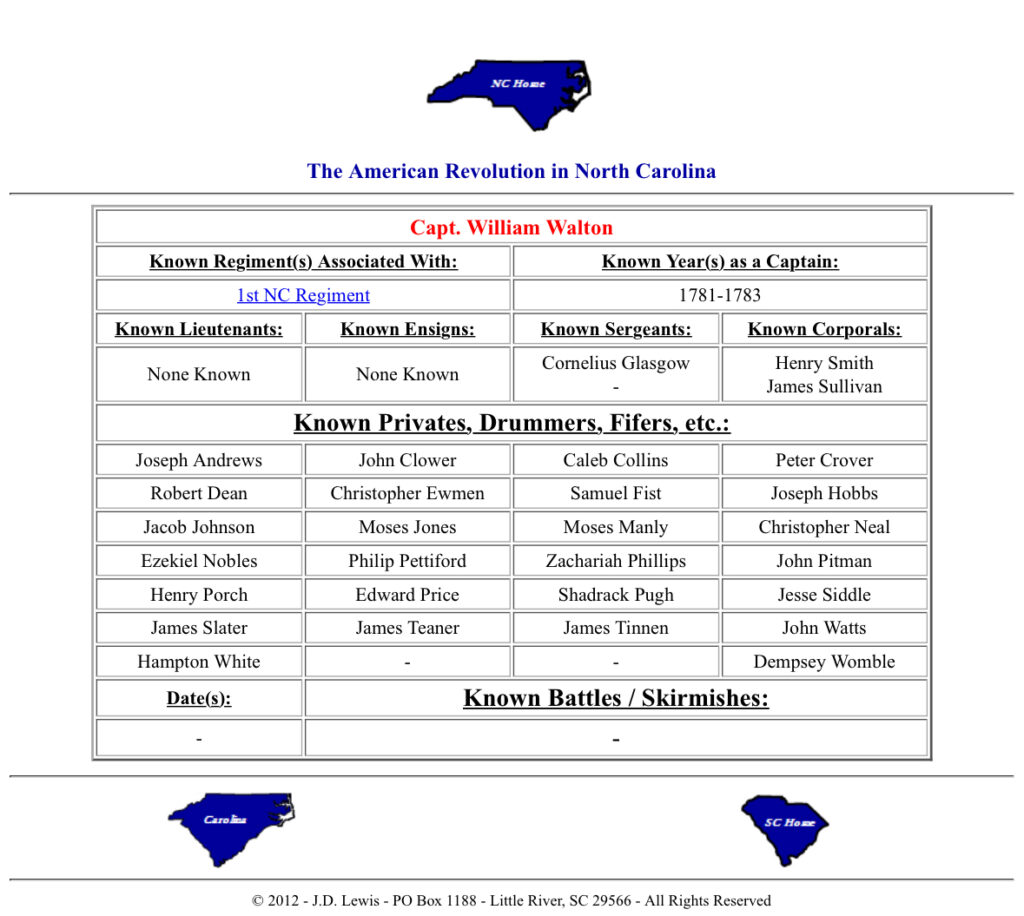
Biography of Revolutionary War Soldier Private Henry Porch, 1st & 10th North Carolina Regiments, Continental Army.
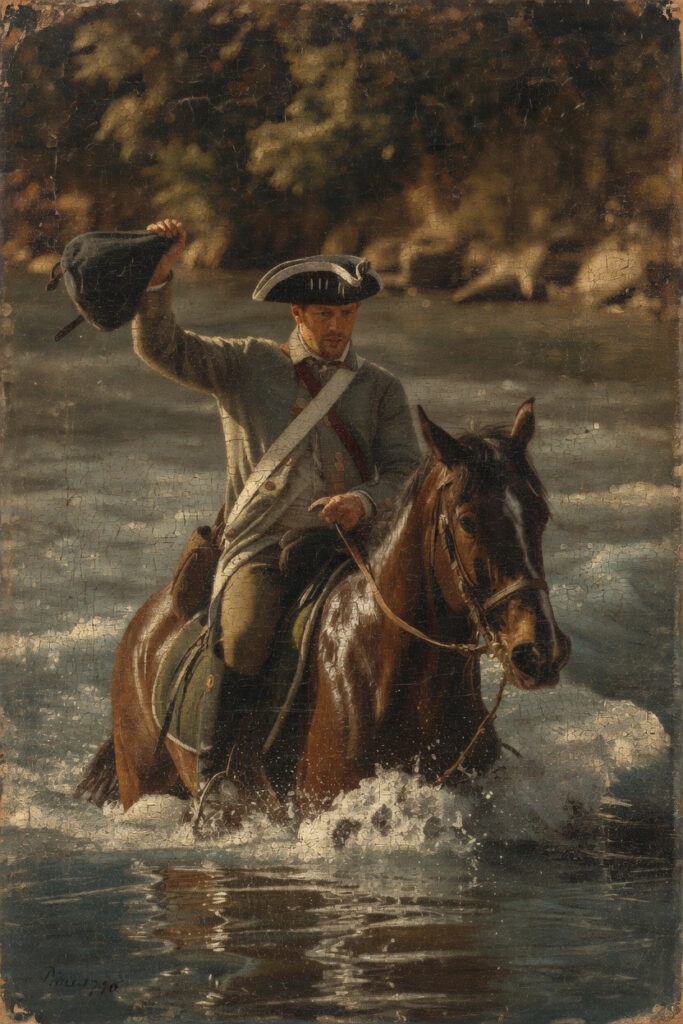
“Porch’s primary role was as a private soldier and messenger; notably, at Briar Creek, while carrying money to pay Greene’s army, he was pursued by British forces. To escape capture and protect the funds, he stood in his stirrups, held the money pouch above his head, and swam across the river on horseback“.
- SAR Patriot Ancestor #
- DAR Patriot Ancestor #
A090809
Campaigns, Battles & Skirmishes
- General Nathanael Greene’s Souther Campaign, 1781
- Battle of Briar Creek (Georgia) on March 3, 1779
- Battle of Guilford Court House (North Carolina) on March 15, 1781
- Battle of Eutaw Springs (South Carolina) on September 8, 1781
Early Life and Background
John Henry Porch, commonly known as Henry Porch, was born in July 1758 in Washington County, Virginia, to William Porch (born 1730). Although born in Virginia, he later resided in Franklin County, North Carolina, where he spent much of his early life and enlisted for military service.
Family Relation to Major Robert Cornelius
Major Robert Cornelius USMC Ret. is a descendant of Henry Porch through the intertwined Porch, Creekmore, and Cornelius family lineages. Henry Porch and his wife Rebecca Denton had son Ezekiel Abbot Porch, who married Mary Batchelor Creekmore (daughter of Robert Creekmore and Elizabeth Batchelor). Their descendants include connections to the Creekmore family, leading to Cyrena Creekmore (born 1832), who married into the Cornelius line, forming the ancestral path to the modern Cornelius family.
Military Service in the American Revolutionary War
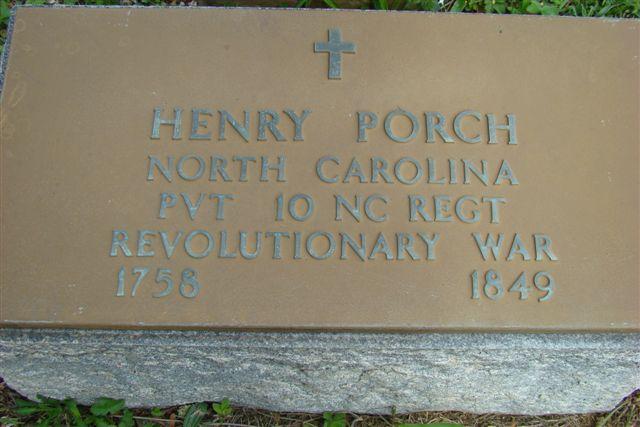
Henry Porch enlisted in the Revolutionary War in 1778 under Captain William Allan (or Allen) in the Bute County Regiment of North Carolina Militia and again in 1781 under Captain Sharp for a 12-month term. He served as a Private in the 10th North Carolina Regiment of the Continental Army, though some records indicate he may have initially served in the North Carolina Militia, which could have been incorporated into the Continental Line. This service in a Continental regiment potentially qualified him for a land grant. Drafted at age 18 or 19, he later volunteered and fought under commanders including General Ashe, General Greene, Captain Sharp, Captain Allen, and Major Hogg, among others.
His service spanned from 1778 to approximately 1782, during which he participated in the Southern theater of the war. He was engaged in the Battle of Briar Creek (Georgia) on March 3, 1779, as part of efforts to counter British advances in the region. Under General Nathanael Greene during the 1781 Southern Campaign, Porch likely took part in key actions including the Battle of Guilford Court House (North Carolina) on March 15, 1781, and the Battle of Eutaw Springs (South Carolina) on September 8, 1781, where North Carolina troops played significant roles in Greene’s maneuvers to wear down British forces under Lord Cornwallis. Porch’s primary role was as a private soldier and messenger; notably, at Briar Creek, while carrying money to pay Greene’s army, he was pursued by British forces. To escape capture and protect the funds, he stood in his stirrups, held the money pouch above his head, and swam across the river on horseback.
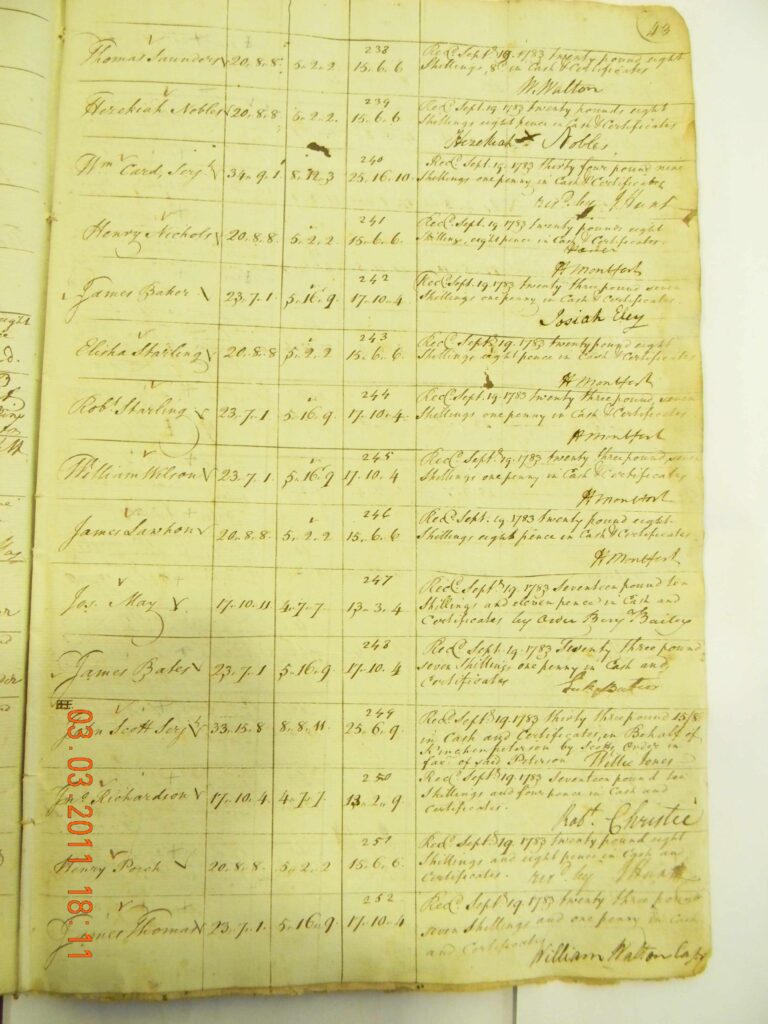
Details of his release from service are not explicitly recorded, but his enlistments suggest he was discharged around 1782 after completing his terms, as the war wound down following the British surrender at Yorktown in October 1781. His service qualified him for a pension under the Pension Act of 1832.
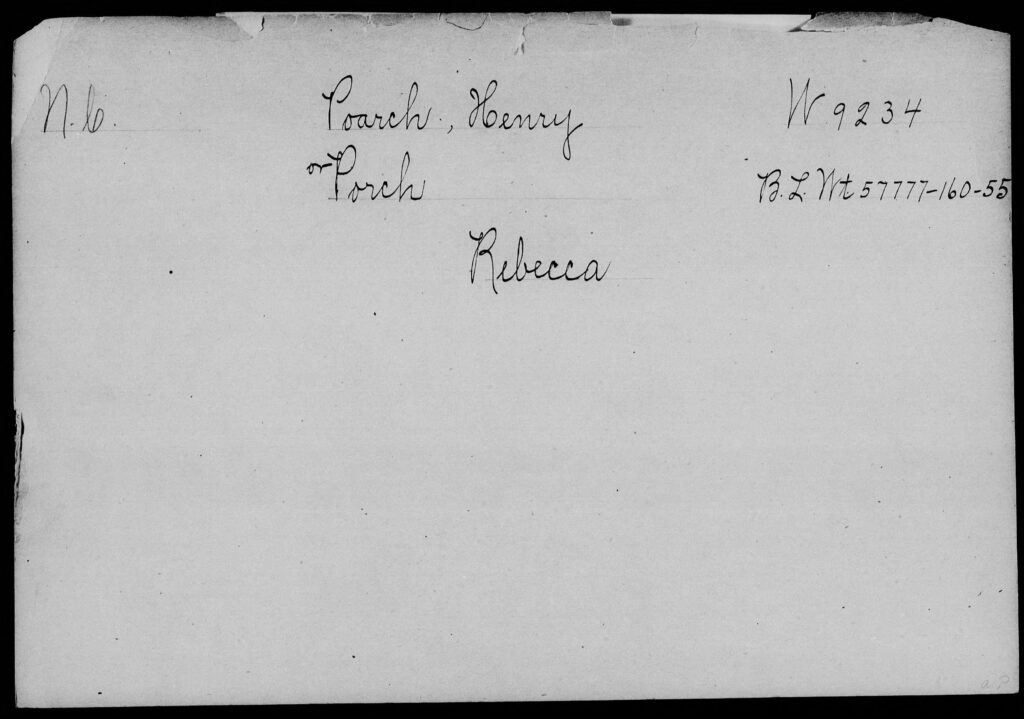
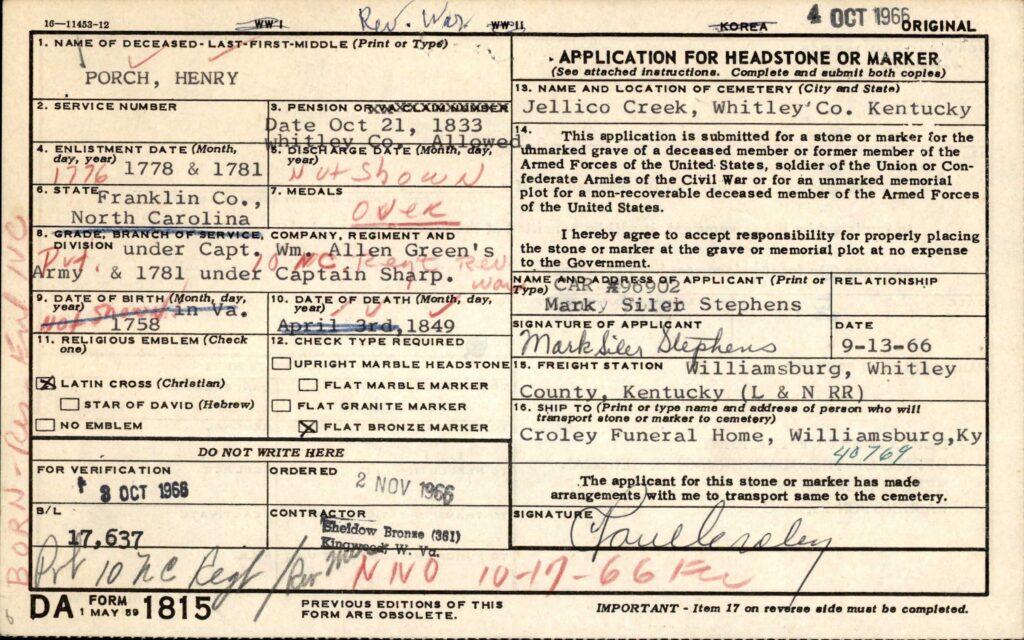
Private Henry Porch saw action in the Battle of Briar Creek (also referred to as Brice Creek).
Marriage and Family
After the war, Henry married Rebecca P. Denton of Franklin County, North Carolina, on December 12, 1786. The couple had at least one son, Ezekiel Abbot Porch (also referred to as Ezekiel A. Porch), who is mentioned in family records.
Later Life and Pension
Porch lived in Franklin County, North Carolina, for most of his life but relocated to Whitley County, Kentucky, around age 47 (approximately 1805). By age 67, he had become disabled due to a hand injury that prevented him from working. On October 21, 1833, at age 75, he applied for and was granted a soldier’s pension while residing in Whitley County. At the time, his assets included 50 acres of poor land valued at $50, one horse worth $50, a cow and calf at $10, and hogs at $10.
Death and Legacy
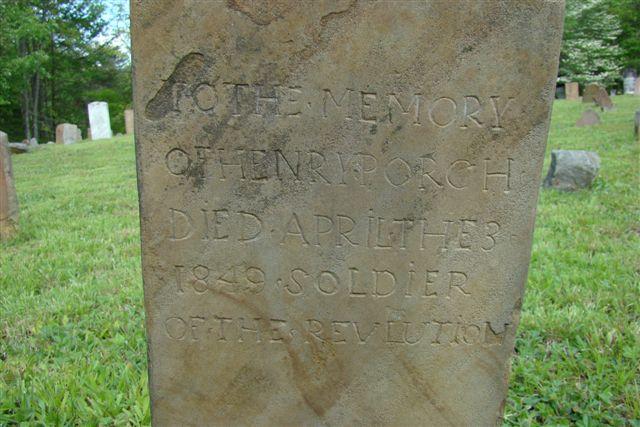
Henry Porch died on April 3, 1849, at the age of 90. He is buried alongside family members at Jellico Creek Cemetery in Williamsburg, Whitley County, Kentucky. His gravestone is inscribed “a soldier of the Revolution.” His widow, Rebecca, received his pension until her death in 1863 at the remarkable age of 113.
Sources
- DAR Patriot Ancestor Database: https://services.dar.org/Public/DAR_Research/search_adb/?action=full&p_id=A090809
- Application of Genevieve Porch Tustison (National No. 106,771), Daughters of the American Revolution (D.A.R.)
- Revolutionary War Pension Application W9234 for Henry Porch (Poarch)
- WikiTree Profile: Porch-96
- The American Revolution in North Carolina: Privates List
- History of Pulaski Co., KY by Alma Owens Tibbals, published by Grace Owens Moore, 1952, p. 50
- History of Kentucky by Judge Lewis Collins, Vol. 1, 1848
- Find A Grave Memorial #14574821: https://www.findagrave.com/memorial/14574646/henry-porch
- Records referencing Ezekiel Abbot Porch
- Genealogical sources on Porch-Creekmore-Cornelius lineages (e.g., Ancestry of Henry Franklin Perkins; WikiTree profiles for Creekmore-196 and Creekmore-218)